Portable wheelchair lifting platforms
For height differences a ramp cannot take and a permanent lift cannot justify — stages, mezzanines, halls, schools, theatres. Moved by two people, or by one. Indoors or out.
Run the 3D modelA working model of this machine, in the browser, further down this page.
Compare the four
| SF 600 | SF 1000-1 | SF 1100A | SF 1100B | |
|---|---|---|---|---|
| Lift range | 100–600 mm | 115–1000 mm | 115–1100 mm | 115–1100 mm |
| Load capacity | 190 kg | 190 kg | 220 kg | 300 kg |
| Power | 240 V AC 1 A / 24 V DC 10 A | 240 V AC 2 A / 24 V DC 20 A | 240 V AC 2 A / 24 V DC 20 A | 240 V AC 3 A / 24 V DC 30 A |
| Lift width overall | 976 mm | 1301 mm | 1251 mm | 1251 mm |
| Platform working width | 812 mm | 1101 mm | 1101 mm | 1101 mm |
| Platform working length | 1300 mm | 1400 mm | 1400 mm | 1400 mm |
| Length, ramp up | 1440 mm | 1792 mm | 1575 mm | 1575 mm |
| Length, ramp down | 1739 mm | 1921 mm | 2016 mm | 2016 mm |
| Minimum door width | 850 mm | 550 mm | 850 mm | 850 mm |
| Weight | 68 kg | 98.5 kg | 115 kg | 115 kg |
| Stowed W × D × H | 1440 × 800 × 1105 mm | 1470 × 513 × 1428 mm | — | — |
| Standards | AS 1735.14-1998 | AS 1735.14-1998; Premises Standards 2010 | AS 1735.14-1998; Premises Standards 2010 | AS 1735.14-1998; Premises Standards 2010 |
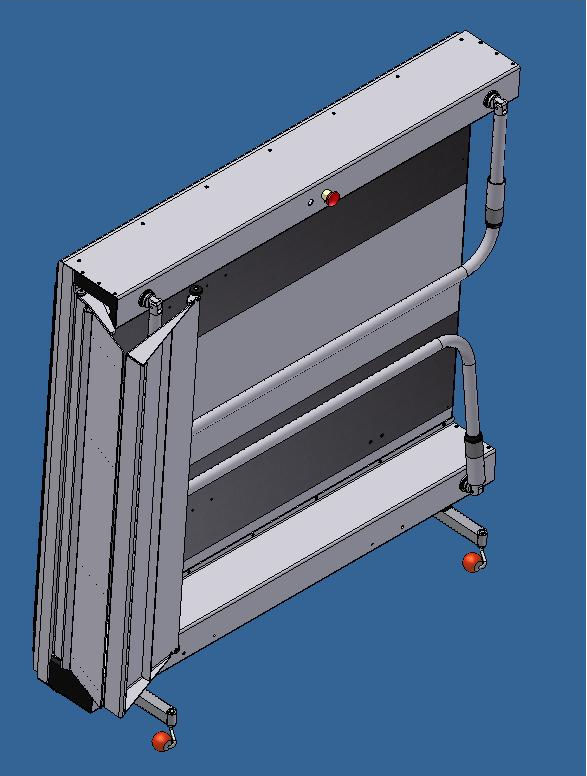
Stowed dimensions were not published for the SF 1100 range. The unit can be put on its side to minimise stowing area.
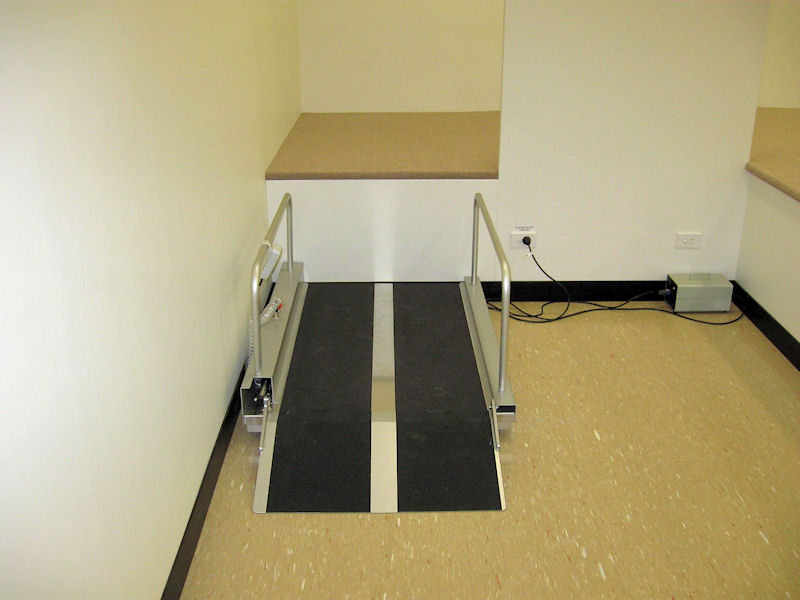
SF 600
Carries a wheelchair and user over small height differences of up to 600 mm. Easily moved by two people, or even one, and suitable for indoor or outdoor applications. Addresses all the relevant requirements of AS 1735.14-1998.
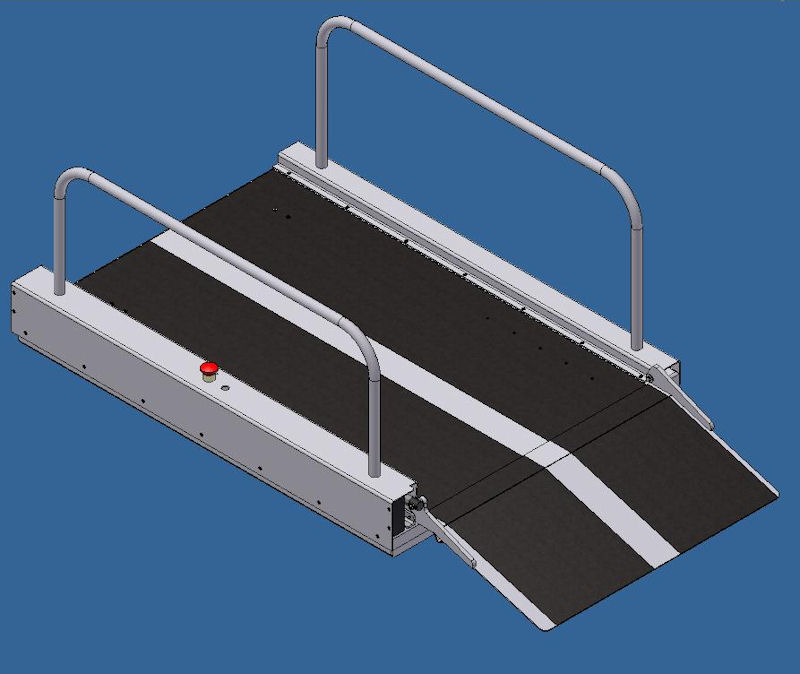
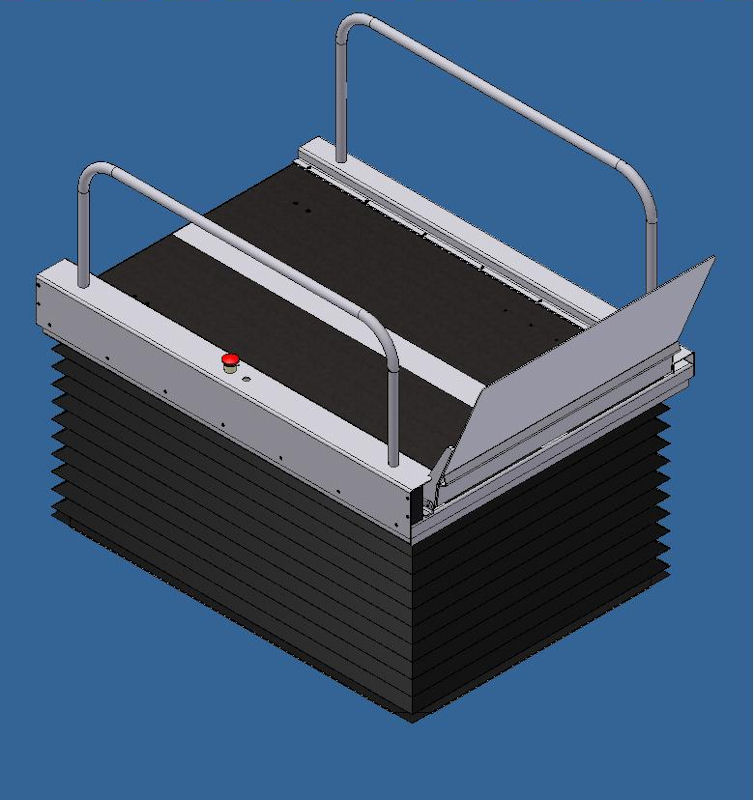
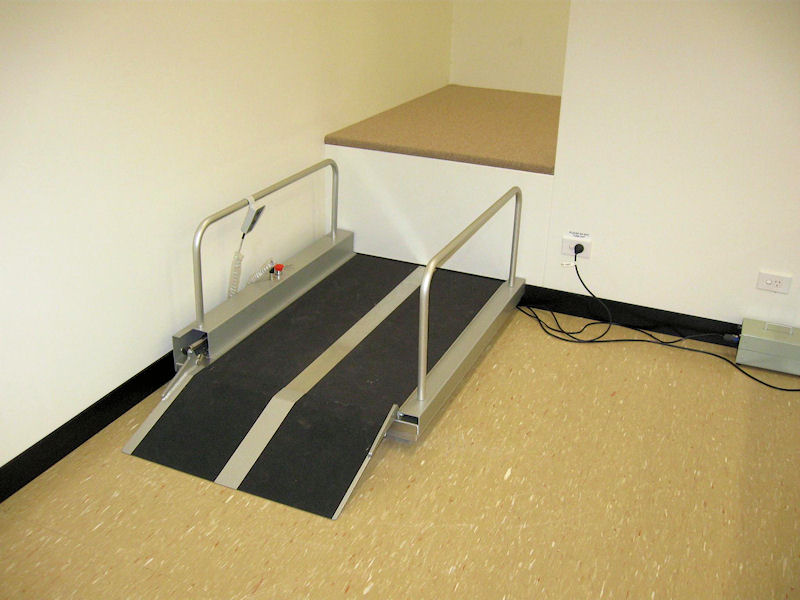
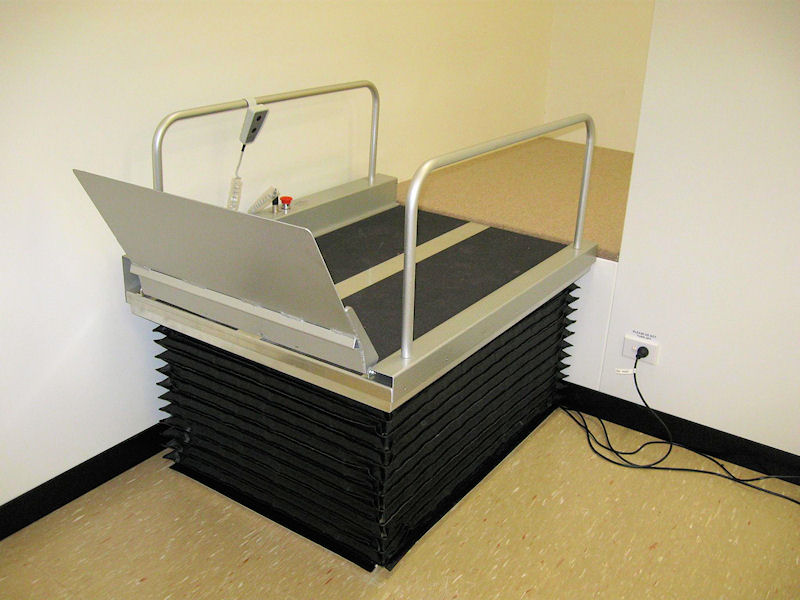
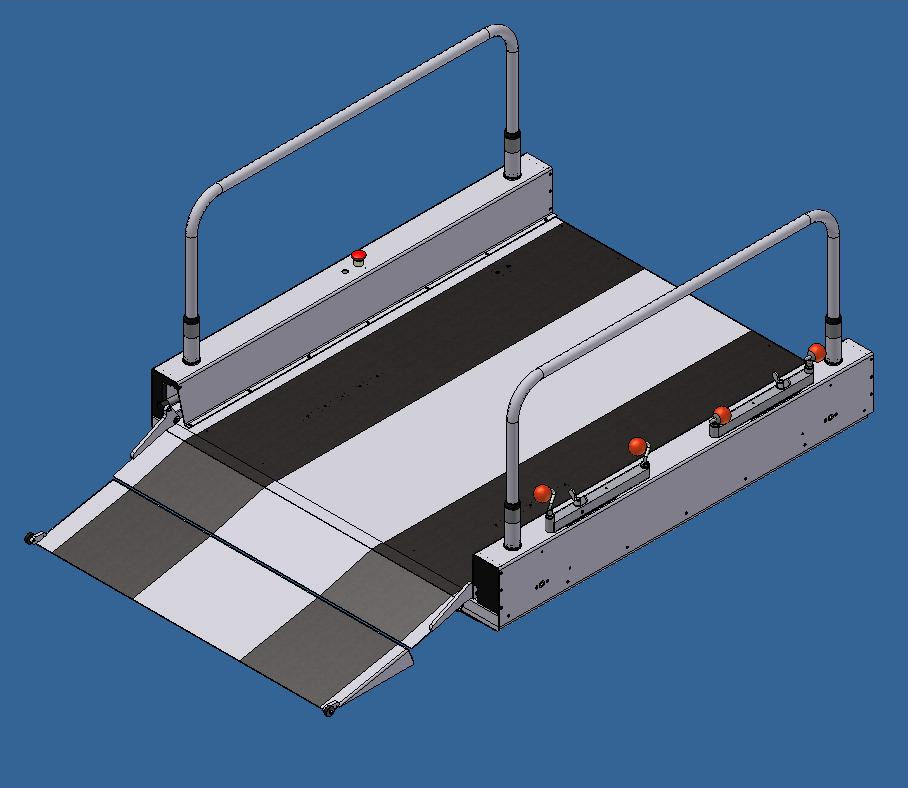
SF 1000-1
An ideal solution where temporary wheelchair access is required to stages or mezzanine levels in schools, theatres and village halls. The narrowest minimum door width in the range at 550 mm. Addresses the requirements of AS 1735.14-1998 and the Disability (Access to Premises — Buildings) Standards 2010.
SF 1100
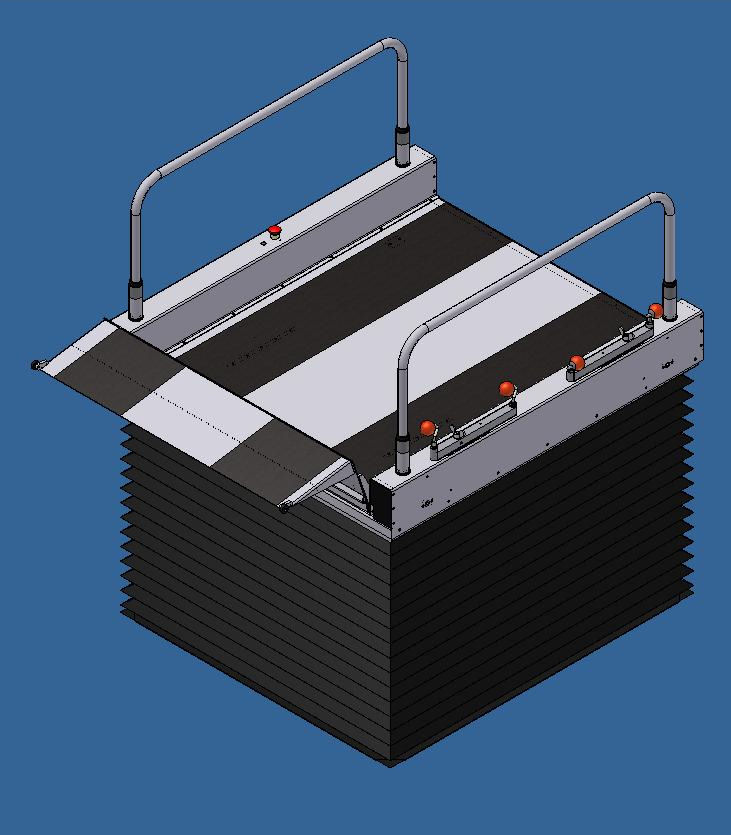
A follow-up development of the SF 600, capable of carrying a wheelchair user and an assistant over height differences of up to 1100 mm.
The standard platform in both versions has access and drive-off at opposite ends; drive-off can be introduced on the right or left hand side depending on the application. Lifting capacity is 220 kg (SF 1100A) or, on request, 300 kg (SF 1100B).
Use it where a wheelchair ramp would be too long or too steep, and where an ordinary lift is impractical, impossible or too expensive.
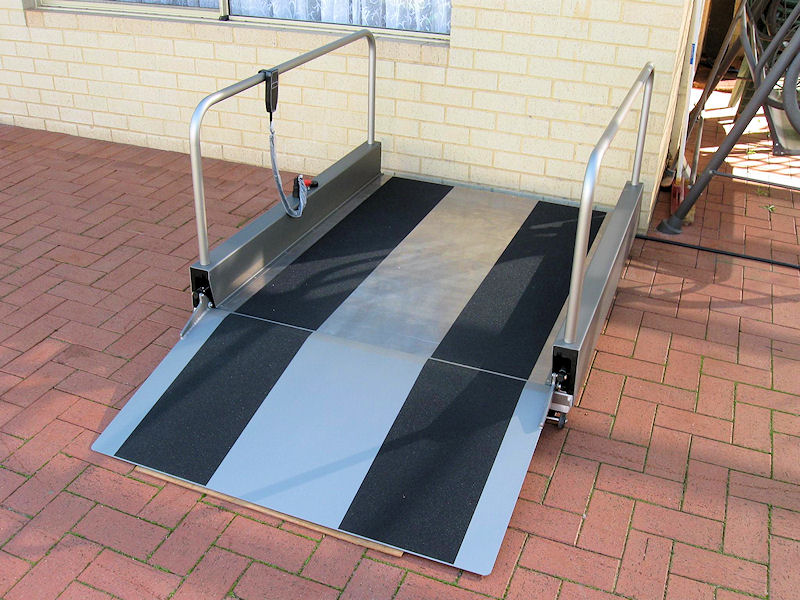
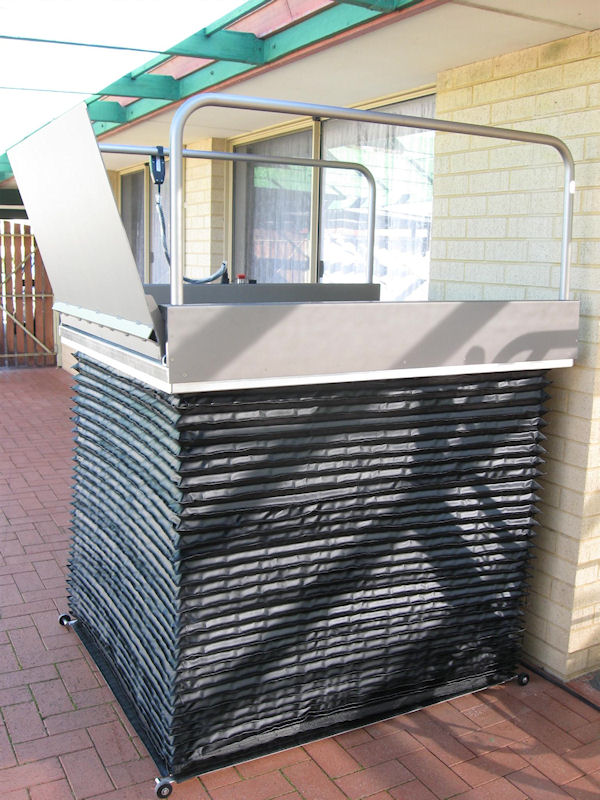
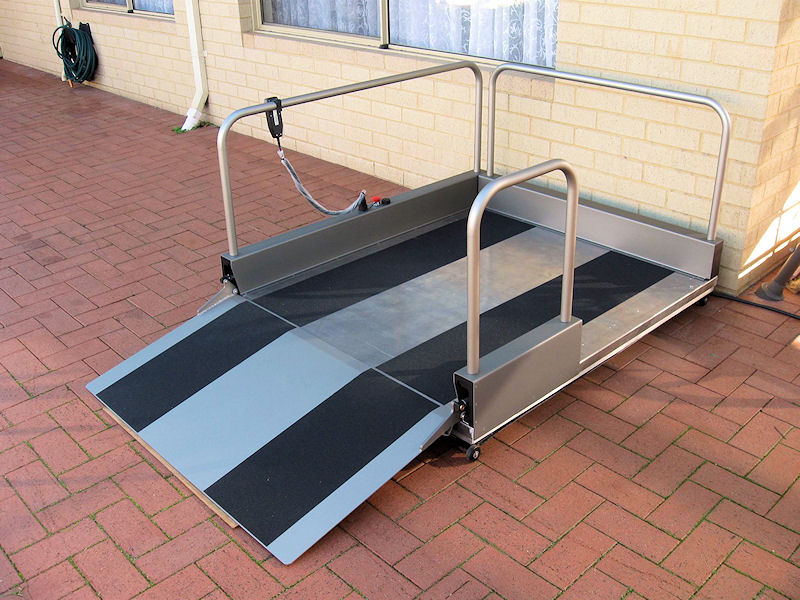
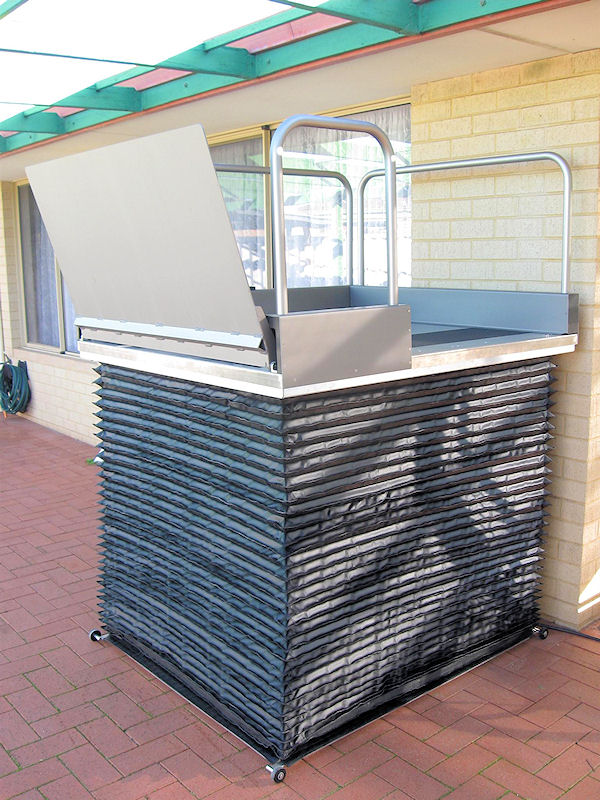
Operation
The driving mechanism is a 24 V DC screw actuator of worm gear type. In the event of a power failure it stops at the spot the interruption occurred. The unit is operated with a hand-held control — two buttons, no prior knowledge required.
Raising from the lowest level
- With the platform at its lowest level and the access ramp lowered to that level, the user drives onto the platform without hindrance.
- Pressing UP raises the access ramp, which then functions as a guard against rolling off. The action continues as long as the button is held.
- With the ramp at its highest level and UP still held, the platform rises.
- As soon as the platform is level with the landing it stops automatically, and the user drives onto the landing.
Lowering from the highest level
- The user drives onto the platform.
- Pressing DOWN lowers the platform, continuously for as long as the button is held.
- At the lowest level, with DOWN still held, the access ramp lowers to the ground and the user drives off.
Warranty
ME&QC warrants that its lifting equipment is free from defects in materials and workmanship under normal use, and that the equipment will perform substantially in accordance with the specifications and the design intent of the lift. The express warranties are made for 365 days from the date the equipment is delivered to you as the first user. During that period ME&QC will replace any equipment that proves defective in materials or workmanship, without additional charge, on an exchange basis.
Run the machine
A working model of a machine we designed and built, rebuilt from our own drawings and driven by the parameters that actually define it. Drag to orbit; move a slider and the geometry is recomputed.
These are demonstrations, not design records. Each is built from what we hold — drawings where drawings survive, photographs where they do not — and it is a preview of the article, not a drawing of it. Nothing here should be used to order, manufacture or check a part. For dimensions, ask.