Fifty years at sea. Forty at the machine. One person.
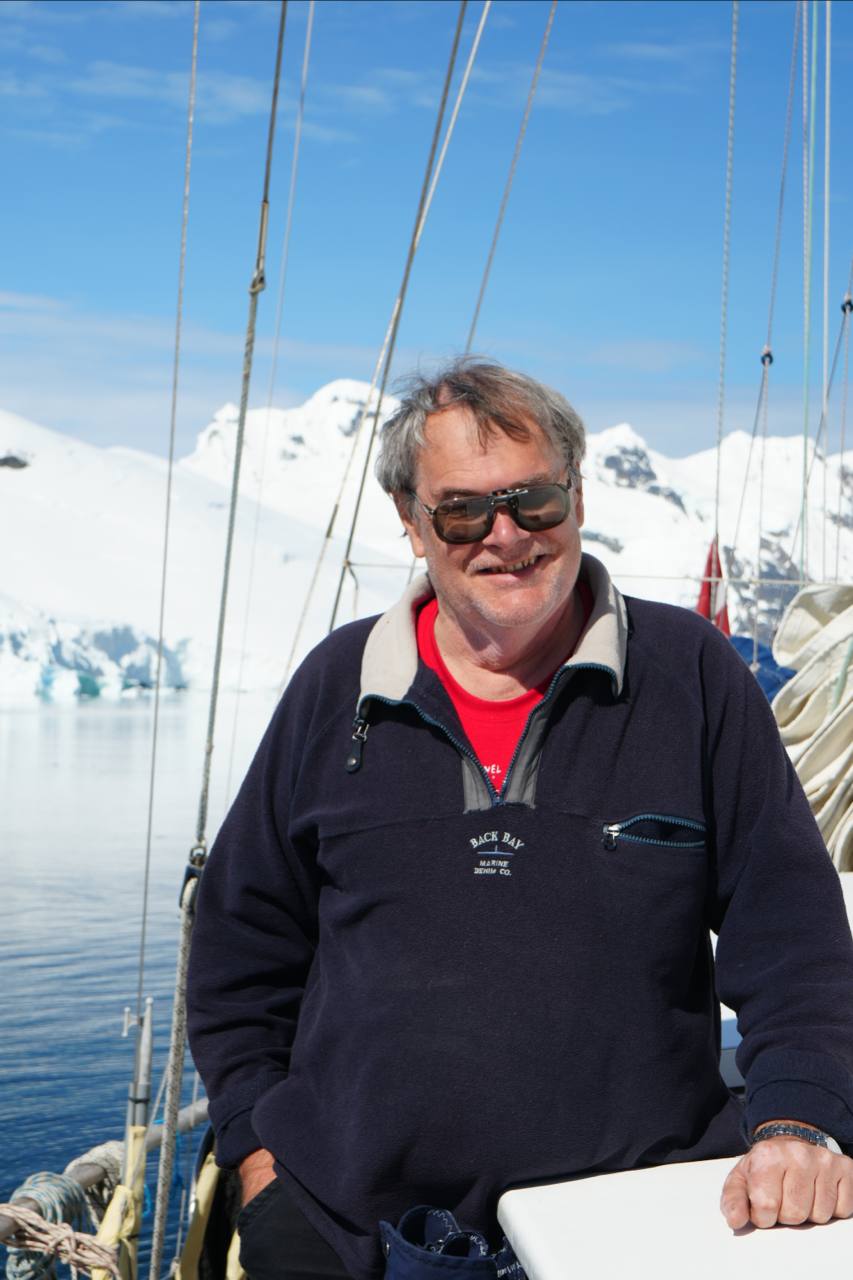
Igor Mironenko first went to sea at seventeen and has not really stopped. He is a ship's master who has spent years leading expeditions in the Arctic and the Antarctic — and a mechanical engineer who designs and cuts the parts himself.
Fifty years after the first of them, the boat is an expedition ketch called Mon Coeur and the landfalls are Stanley, Grytviken and the Antarctic Peninsula. Twenty-five photographs →
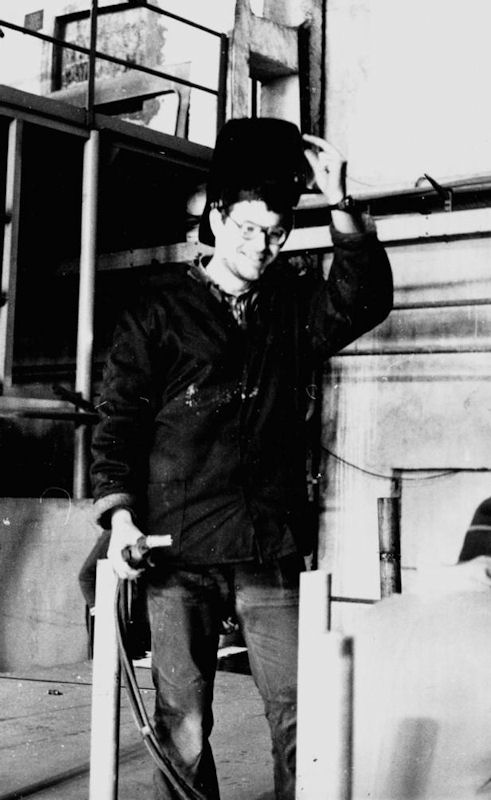
Those are not two careers. They are the same instinct: something has to exist, nobody has built it before, and there is no manual. In Kiev in 1978 that meant machining a racing yacht's winches by hand because there were none to buy. In Perth in 2011 it meant taking a tape measure to a WWII Rolls-Royce Merlin and coming back with a propeller that worked first time.
Master · Expedition leader · Engineer · Boat builder · Inventor · Author
By the numbers
Everything below is checkable — against a patent register, a race result or a standards catalogue.
Forty years, in order
or laterFalklands, South Georgia and the Antarctic Peninsula aboard the expedition ketch Mon Coeur.Stanley, Grytviken, Shackleton's grave, the king penguin coast, and an anchorage inside the peninsula ice. Twenty-five photographs →
The builder
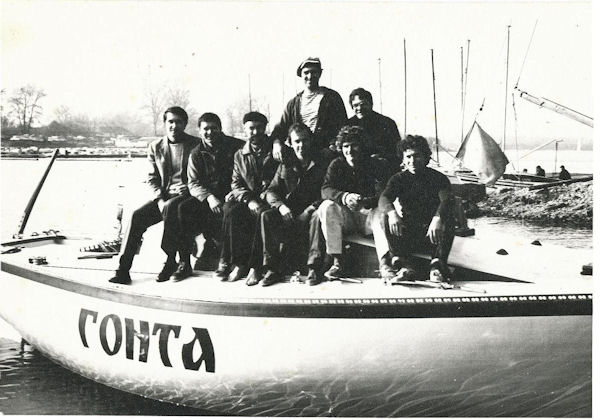
In 1978, at a yacht club in Kiev, a group of amateurs decided to build an ocean-going racing yacht. There was no supply chain to order from, so they made the boat and everything on it — the ballast keel, the rudder, the mast, the blocks, the winches. It took three years and three months.
The second boat, Kupava, took two months to get a hull in the water. That gap — a year down to two months — is the whole of engineering experience expressed as a number, and it is the most telling fact in this archive.
The racer
In 1988 the Fazisi project set out to put the Soviet Union into the Whitbread Round the World Race with nine months, no budget and a crew who had never done it. They finished eleventh against the best-funded professional boats in the sport, and on one day of that race they sailed 386 miles — the second-longest 24-hour run of the entire fleet.
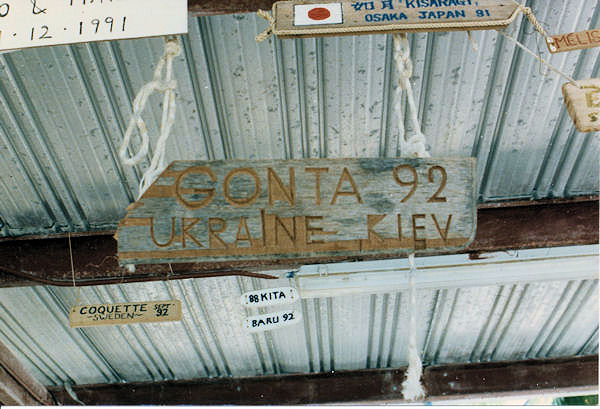
He then sailed Gonta to Australia, lost her mast off Kalbarri, crossed the Indian Ocean to the Cocos Islands, and thirty years later was still racing — ten minutes off a course record between Fremantle and Geraldton.
The master
The yachts are the visible part. Igor holds a master's ticket and has commanded vessels professionally for many years, including a long run of expeditions in the Arctic and the Antarctic as expedition leader.
Polar expedition work is the hardest possible endorsement of everything else on this site. It is command in a place where nothing can be ordered in, help is days away, and whoever is aboard has to fix what breaks with what they have. That is the same job as the Merlin propeller, at a much higher stake — and the reason a laboratory buying an instrument from a one-man workshop is buying from the right one-man workshop.
Twenty-five photographs record it: the expedition ketch Mon Coeur alongside at Stanley; snow falling on her deck at Grytviken; Shackleton's headstone; a king penguin colony packed along a South Georgia beach; tabular bergs on the horizon and an anchorage inside the Antarctic Peninsula flat enough to mirror the mountains.
The engineer
ME&QC has no sales department, no drawing office and no second shift. One person takes a job from a sketch to a documentation package, which means nothing is lost in a handover, because there isn't one.
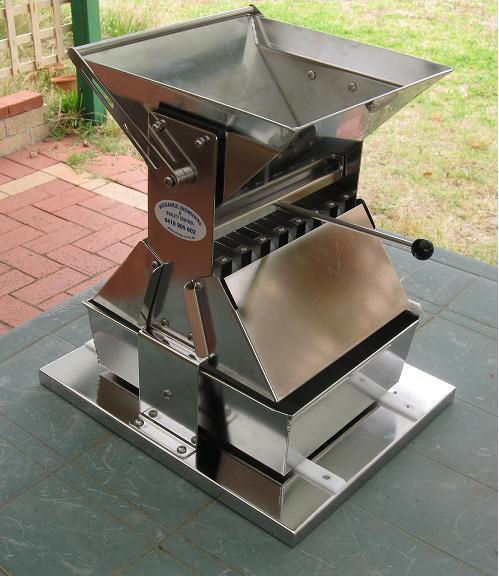
The designs are built to published standards rather than to taste — AS 1141.2 and ISO 3082 for the splitters, AS 1735.14-1998 and the Premises Standards 2010 for the lifting platforms, AS 1657-1992 for access. One of them, the splitter's slot-protecting lining, was novel enough to be granted an Australian patent.
The author
Between 2015 and 2016 he wrote and typeset two books about the boats — not a memoir written for a publisher, but a record set down by the person who was in the shed and then on the water. Together they carry 200 photographs, many of which exist nowhere else.
What he puts his own name to
I personally guarantee all our work is on time and faultless, otherwise we shall replace it within 5 working days and only charge you 75% of the original billing fee.
Igor Mironenko, Principal
It is worth reading that twice. It is not a warranty clause written by a lawyer — it names the person, sets a deadline, and volunteers a discount for his own failure. It has been on the site since it was built, and in eighteen years it was never quietly softened.
The record, in full
Everything above is the short version. The long version — five yachts, three books, four hundred photographs and the account of a Whitbread campaign that has almost no first-hand record in English — is kept as an archive inside this section, in its own visual register, because it is read for different reasons than the rest of the site.